The Brownstones Has 26 Homes and Will Never Have a 27th. Here's What That Does to How You Buy One.
September 24, 2026
September 24, 2026
An appraiser pulling comps for a home in The Brownstones runs into a problem most Franklin listings never create. The standard request from a lender is three closed sales within the past six months, ideally the same subdivision. In a community built on a single 2.2-acre parcel at 1st Avenue and Church Street, with construction that finished more than a decade ago and no land left to add a single additional unit, that six-month window can come back nearly empty. Sometimes the closest true comp is a sale from two years earlier. Sometimes it isn't in The Brownstones at all.
That is the part buyers researching this neighborhood tend to miss. The price tag gets the attention. The supply mechanism underneath it is the more useful thing to understand before you write an offer.
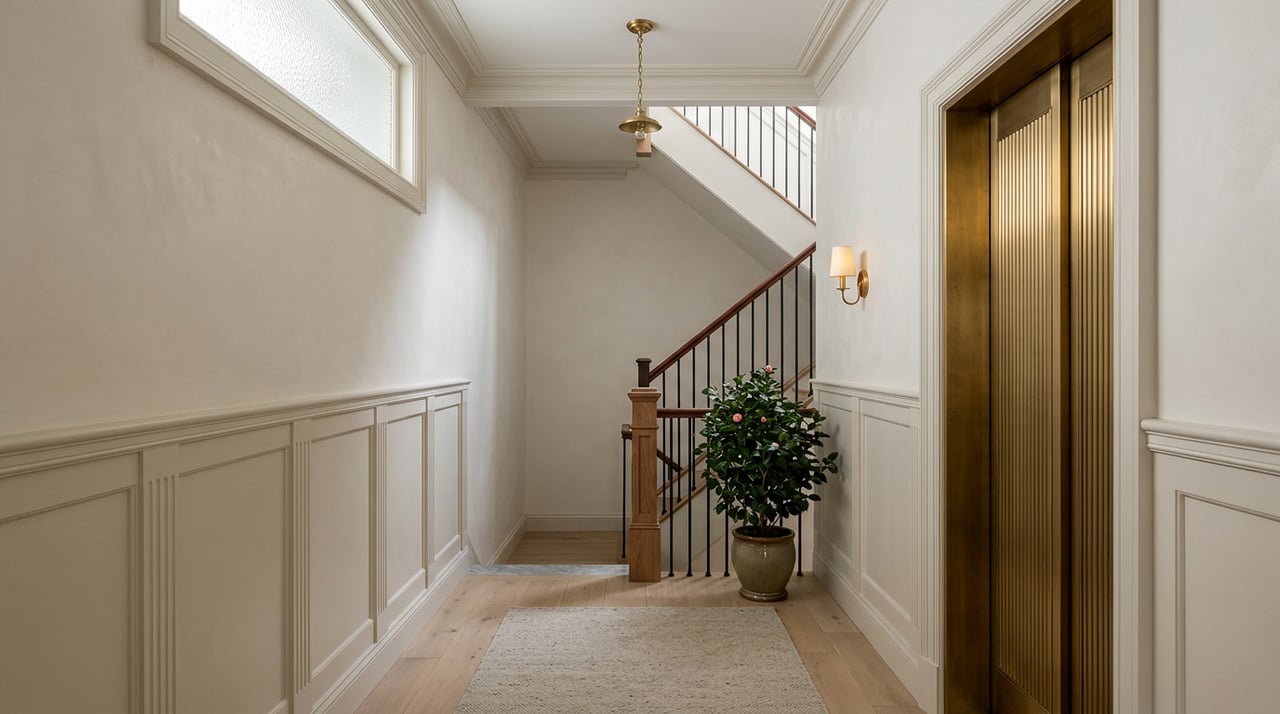
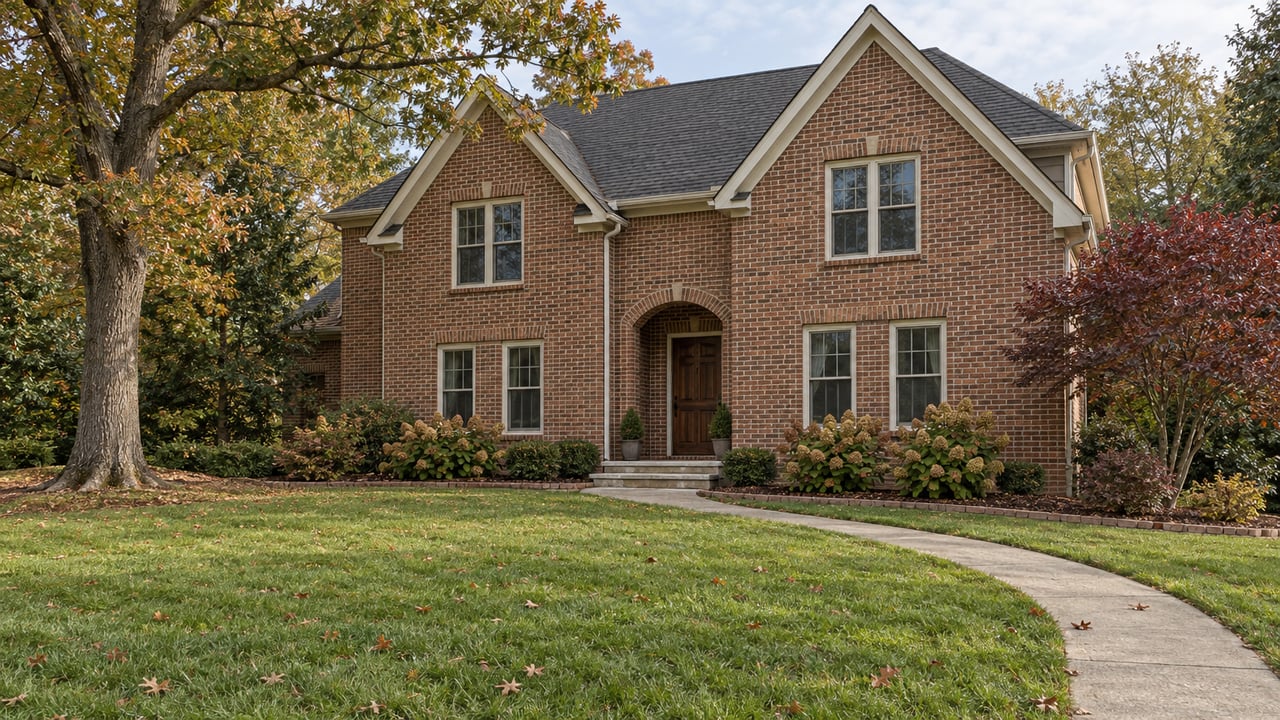
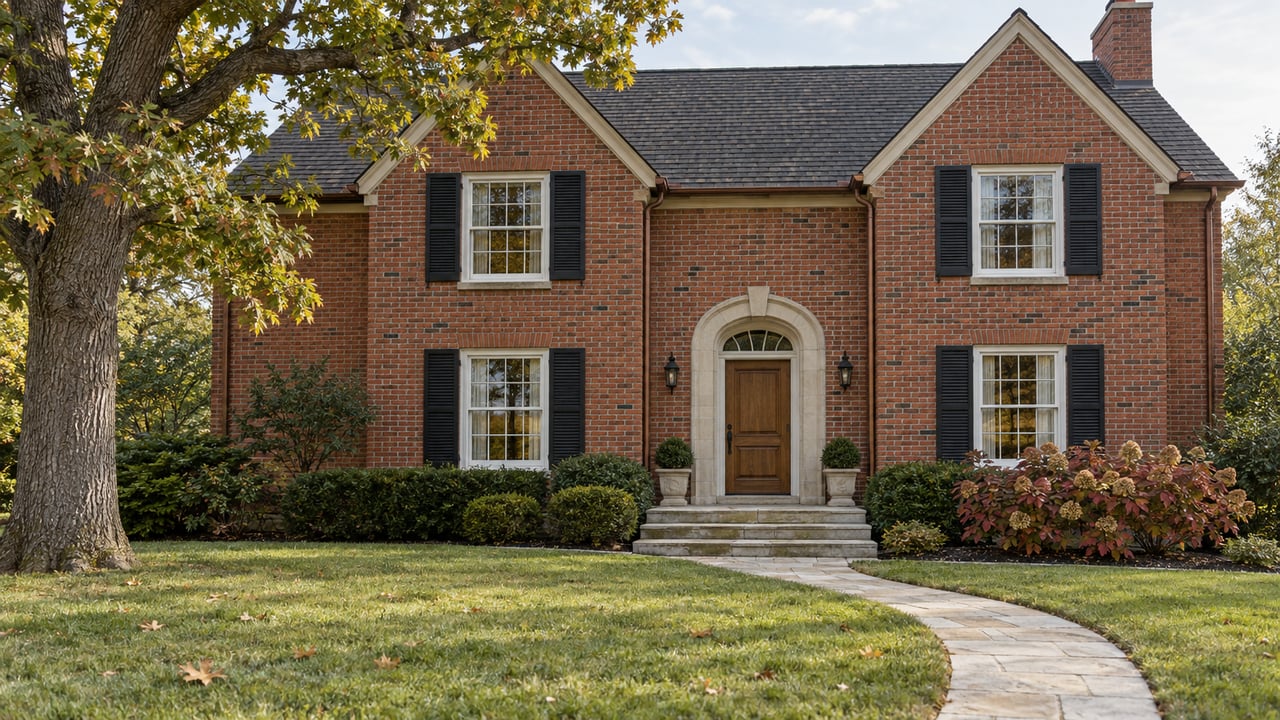
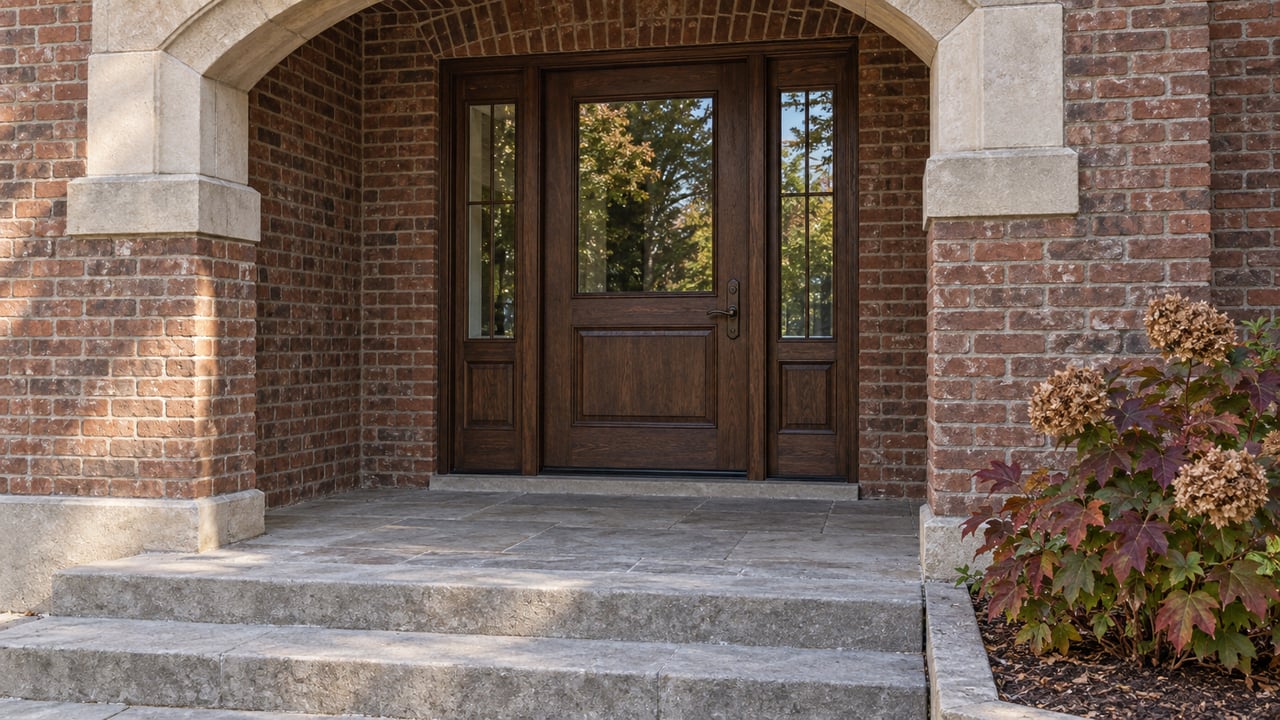
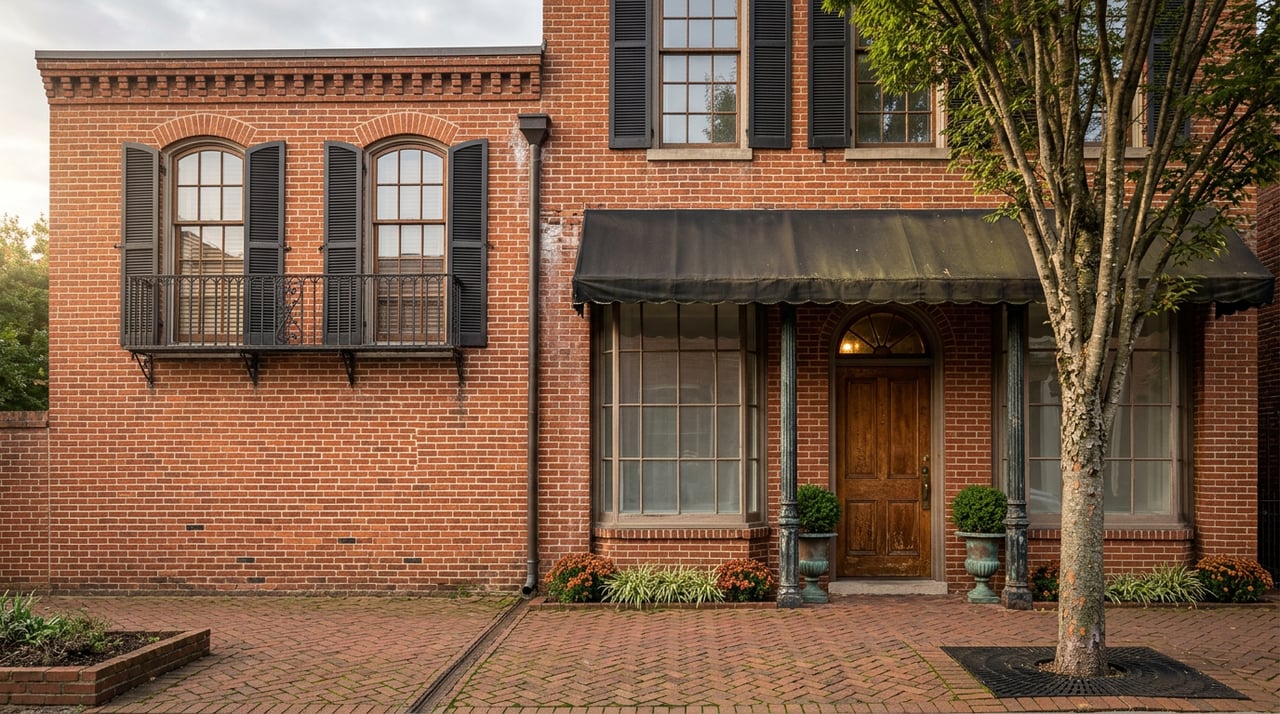
The Brownstones is a gated enclave of 26 luxury townhomes half a block from the Franklin town square. Most counts land on 26, though a couple of older listings round it to 25 or 30 depending on how they group units with and without basements. The number matters less than the fact that it stopped changing years ago and cannot start again. The parcel was once owned by Williamson County government and had earlier served as tenant housing for a nearby flour mill. Developer Bernie Butler of D9 Development brought the current community to life after admiring the brownstones of Alexandria, Virginia and Washington, D.C. during his years working for Senator John Stennis. Forte Building Group and Highmark Construction built the homes between 2005 and 2012, all brick, with period-appropriate detailing designed to sit comfortably among Franklin's 19th-century storefronts. No two units are identical.
Most homes are three stories over a basement with a private elevator and an attached two or three car garage. A handful skip the basement. All of them share a locked gated entry off Church Street that opens onto a landscaped interior courtyard with a fountain and benches, the closest thing the community has to common ground.
There is no phase two. The historic district around it is fully built out, and the parcel itself has no room to expand. Once the last of the original 26 sold, the inventory question in The Brownstones became permanently different from almost anywhere else in Williamson County.
In 2018, the final unsold units in The Brownstones were listed between $1.35 million and $2.4 million. By mid-2026, listings in the community start around $2.7 million. That is a meaningful jump, but the more telling detail is what drove it. This isn't a neighborhood where a builder responded to demand by opening more lots. There was never a lever to pull. Every dollar of appreciation here has come from the same fixed set of 26 homes changing hands less often, and at higher prices, because there is nowhere else to put a buyer who wants that address.
That scarcity cuts both ways for a seller. Fewer transactions mean less downward pressure from a flood of similar listings. It also means less data to lean on when you're setting a price, since the last comparable sale might predate the current kitchen, roof, or market cycle.
The rarity of transactions here occasionally surfaces in unexpected ways. Earlier this year, one of the community's few distressed sales put a unit on Emily Court back on the market as a foreclosure, a genuinely uncommon event for a high-end address this close to Main Street. A foreclosure doesn't reflect what a healthy Brownstones sale looks like, but in a market this thin, it can still end up as the most recent transaction an appraiser finds on file. If that number gets used as a comp without context, it can drag a valuation down in a way that has nothing to do with the home actually being sold.
This is the practical reason a Brownstones purchase or sale benefits from someone who tracks this specific fourteen-block radius closely, not just the broader Franklin market. When the pool of comparable sales is this small, knowing which transactions are representative and which are outliers becomes part of getting the deal financed cleanly. A lender's appraiser will pull whatever data is available. Whether that data tells the right story is a separate question, and one worth raising with your lender before the appraisal is ordered, not after it comes back low.
Zero lot lines mean zero yard. That is the honest tradeoff of living in The Brownstones, and it is worth saying plainly rather than dressing it up. What you get instead is a private elevator, a rooftop deck or courtyard patio depending on the unit, and a location where most of downtown Franklin's daily errands happen on foot.
Morning coffee is a short walk to Frothy Monkey or Merridee's Breadbasket. Dinner options within a few minutes include Cork and Cow, Gray's on Main, Red Pony, Puckett's, and 55 South, and O'Be Joyful is the stop for anyone who wants Franklin's largest whiskey selection rather than another cup of coffee. Pull-Tight Theatre sits directly across the street on Second Avenue, and the Franklin Theatre, originally built in 1937 and renovated in 2011, is around the corner. For anyone who misses having grass to walk on, Pinkerton Park is a short walk away, with a one-mile fitness trail, picnic pavilions, and the Tinkerbell Playground. It functions as the neighborhood's shared backyard in a way the courtyard alone can't quite manage.
Residents also get a front-row view of Franklin's Main Street festival calendar, including Wine Down Main, the Jazz Festival, Pumpkinfest, and Dickens of a Christmas, without needing to fight for parking to attend them.
If you're comparing The Brownstones to other downtown Franklin options, the deciding factor usually isn't square footage or finish level. It's whether you're comfortable buying into a market where the next comparable sale might not happen this year, and where patience on the front end (waiting for the right unit to come up) trades off against patience on the back end (waiting for the next data point to confirm what your unit is worth).
For buyers, that means building in extra time for financing conversations and asking your lender early how they plan to handle a thin comp set. For sellers, it means pricing with an awareness that the last sale in the community may no longer reflect current conditions, and that a knowledgeable local agent's read on recent activity across similar downtown properties can matter as much as anything pulled from a database.
None of this makes The Brownstones a harder place to transact. It makes it a different one, and understanding the difference before you're under contract is the whole point.
Will more Brownstones units ever be built? No. The parcel is fully built out and sits within Franklin's historic district, where there is no adjacent land to expand into. The 26 homes that exist today are the full and final count.
If sales are this rare, how do I know what a fair offer looks like? Start with whatever recent Brownstones sales exist, but weigh them against comparable downtown Franklin properties of similar vintage and finish, not just proximity. A local agent who tracks both markets can help you separate a true comp from a coincidence.
Does the rare foreclosure earlier this year mean values are softening? Not necessarily. A single distressed sale in a community this small tells you more about that seller's circumstances than about the neighborhood's overall direction. Look at the full pricing history, not one data point, before drawing a conclusion.
If you're weighing The Brownstones against another downtown Franklin address, or trying to make sense of a comp sheet that doesn't quite add up, Loy Hardcastle has spent three decades reading exactly this kind of market. Let's Connect before you write the offer, not after the appraisal comes back with questions.
This article is general information, not legal, tax or financial advice. Consult a qualified professional about your situation.
Stay up to date on the latest real estate trends.
He brings unmatched local knowledge, trusted relationships, and proven results to every transaction. Consistently ranked among the nation's top agents, he specializes in residential, commercial, and historic properties throughout Franklin, Williamson County, and Middle Tennessee, providing expert guidance and dedicated service from start to finish.